Preparing for a Google interview is different from preparing for a typical startup loop. The bar is high, the process is structured, and the rounds test specific things in specific ways. This Google interview preparation guide walks through the full hiring process, each round, what "Googleyness" actually means, and a realistic plan to get ready — whether you're targeting an L3 (entry), L4, or L5 software engineer role.
The Google hiring process, end to end
- Recruiter screen. A quick call on your background, target level, and timeline.
- Phone / video technical screen. One or two 45-minute coding rounds on a shared doc — DSA, no autocomplete.
- On-site loop (now usually virtual). Four to five rounds: two or three coding, one system design (for L5+), and a behavioral / "Googleyness and leadership" round.
- Hiring committee. Your packet — interviewer feedback and scores — is reviewed by a committee that makes the actual decision. No single interviewer can hire or reject you.
- Team match and offer. You're matched to a team, then the offer and level are finalized.
The coding rounds: what Google's DSA interview tests
Google's coding interviews lean heavily on data structures and algorithms. Expect questions on:
- Arrays, strings, and hash maps (the bread and butter).
- Trees and graphs — BFS, DFS, and traversal variants are extremely common.
- Dynamic programming — at least one round usually touches it.
- Recursion, backtracking, heaps, and sliding-window patterns.
But raw correctness isn't enough. Google interviewers score your problem-solving process: clarifying the question, stating your approach before coding, analyzing time and space complexity, and talking through your code as you write it. A working solution delivered in silence scores worse than a clear, communicated approach. For practice problems, see our LeetCode alternatives guide.
The system design round
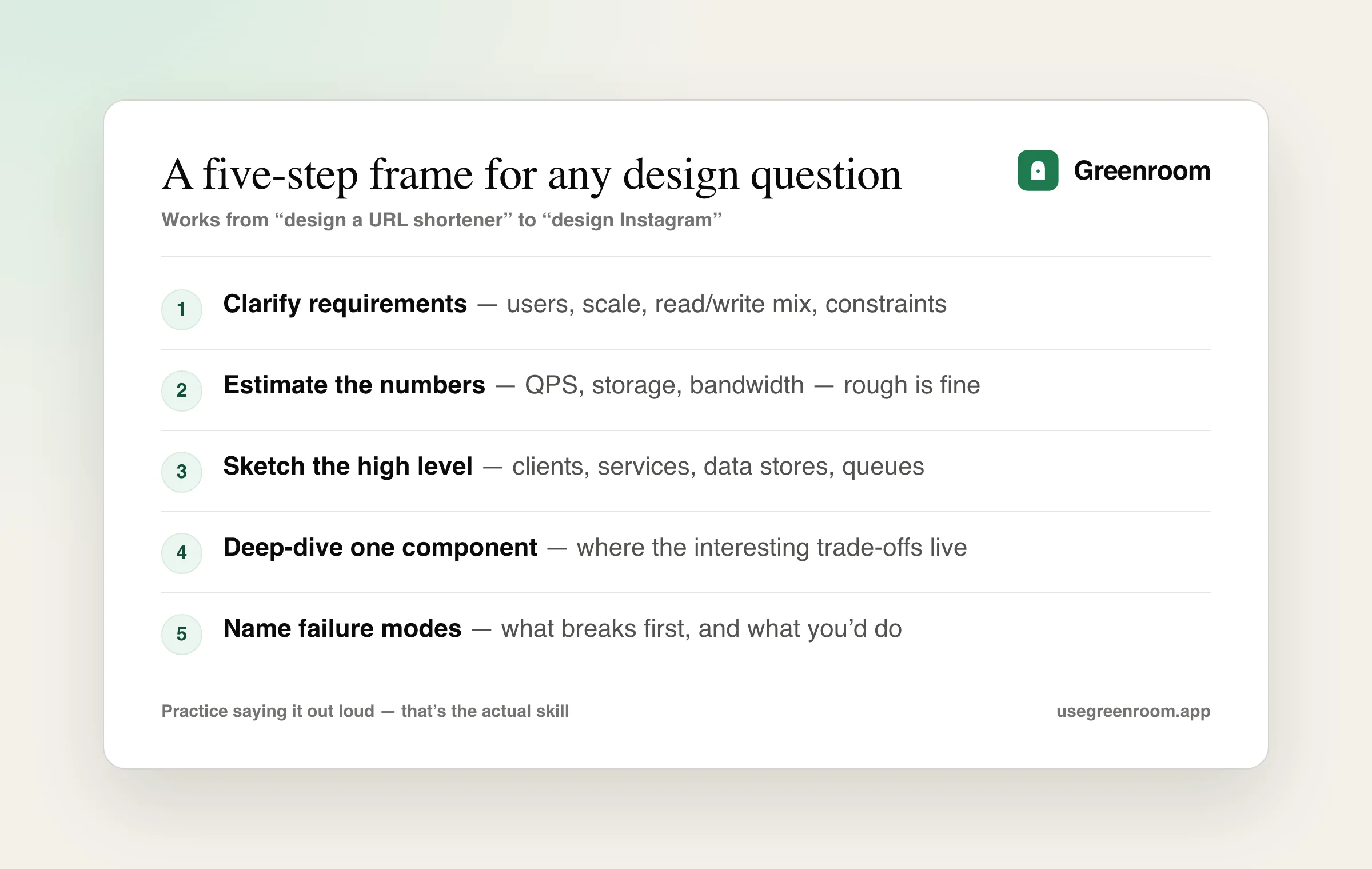
For L5 and above, expect a 45-minute system design interview. Google wants to see that you can take a vague prompt ("design YouTube's view counter", "design a rate limiter") and drive it: clarify requirements, estimate scale, sketch a high-level architecture, then deep-dive on the interesting trade-offs. Use a consistent framework — requirements → estimates → high-level design → deep dive → failure modes — so you never freeze on an open-ended prompt.
What "Googleyness" really means
Google's behavioral round goes by "Googleyness and Leadership." It's not fluff — it's a scored signal. Interviewers look for comfort with ambiguity, intellectual humility, collaboration, bias to action, and putting the user first. Prepare STAR-format stories about navigating ambiguity, disagreeing respectfully, and owning a hard problem, just as you would for any behavioral interview.
A realistic study plan
- Weeks 1–4: Rebuild DSA fundamentals. One pattern per day (two-pointers, sliding window, BFS/DFS, DP), 2–3 problems each, always out loud.
- Weeks 5–8: Mixed timed problems under 30-minute limits. Start system design fundamentals (caching, sharding, load balancing, queues).
- Weeks 9–12: Full mock loops — coding + system design + behavioral — spoken, end to end. This is where most candidates discover their communication, not their knowledge, is the gap.
Practise the spoken side
You can grind problems silently and still bomb a Google interview, because the real thing is a conversation. Greenroom runs realistic spoken technical and behavioral mock interviews, asks Google-style clarifying and follow-up questions, and gives you feedback on how clearly you reason out loud. Combine it with our FAANG preparation guide for the full picture — and if you're on the data track, our Google data engineer interview questions guide covers that loop's SQL, pipeline-design and Googleyness rounds specifically.
If you are interviewing for a web role specifically, our Google frontend interview questions guide covers why the coding rounds stay algorithmic and what the frontend design round expects.
Frequently asked questions
How long does it take to prepare for a Google interview?
Most candidates need eight to twelve weeks of consistent preparation. Spend the first month rebuilding data structures and algorithms, the second on timed problems and system design fundamentals, and the final weeks on full spoken mock interviews. Strong fundamentals can shorten this, but the communication and system design rounds still need dedicated practice.
What does Google test in its coding interviews?
Google's coding rounds focus on data structures and algorithms — arrays, hash maps, trees, graphs, recursion, and dynamic programming are the most common. Beyond correctness, interviewers score your problem-solving process: clarifying the question, stating your approach, analyzing complexity, and clearly talking through your code as you write it.
What is Googleyness in the interview?
Googleyness is Google's term for behavioral and cultural signals: comfort with ambiguity, intellectual humility, collaboration, bias to action, and putting the user first. It's assessed in a dedicated behavioral round, so prepare STAR-format stories about handling ambiguity, disagreeing respectfully, and owning difficult problems.
Who actually decides if I get a Google offer?
No single interviewer decides. After your loop, your interviewers' feedback and scores are compiled into a packet that a hiring committee reviews and votes on. This is why consistent, well-communicated performance across every round matters more than impressing one interviewer.
Interviewing for a backend role specifically? Our Google backend engineer interview questions guide covers the DSA band, the system design round and how the hiring committee changes what you should say out loud.