"Tell me about a time you went above and beyond" is an ownership and initiative question. Interviewers want proof that you don't just do the minimum — you notice what's needed and act, even when it's not your job. Here's how to answer with STAR.
What "above and beyond" actually means
It's doing more than the role strictly required, because it was the right thing for the customer, team, or outcome. Examples: solving a problem outside your scope, going the extra mile under deadline, fixing something nobody asked you to, or delighting a customer.
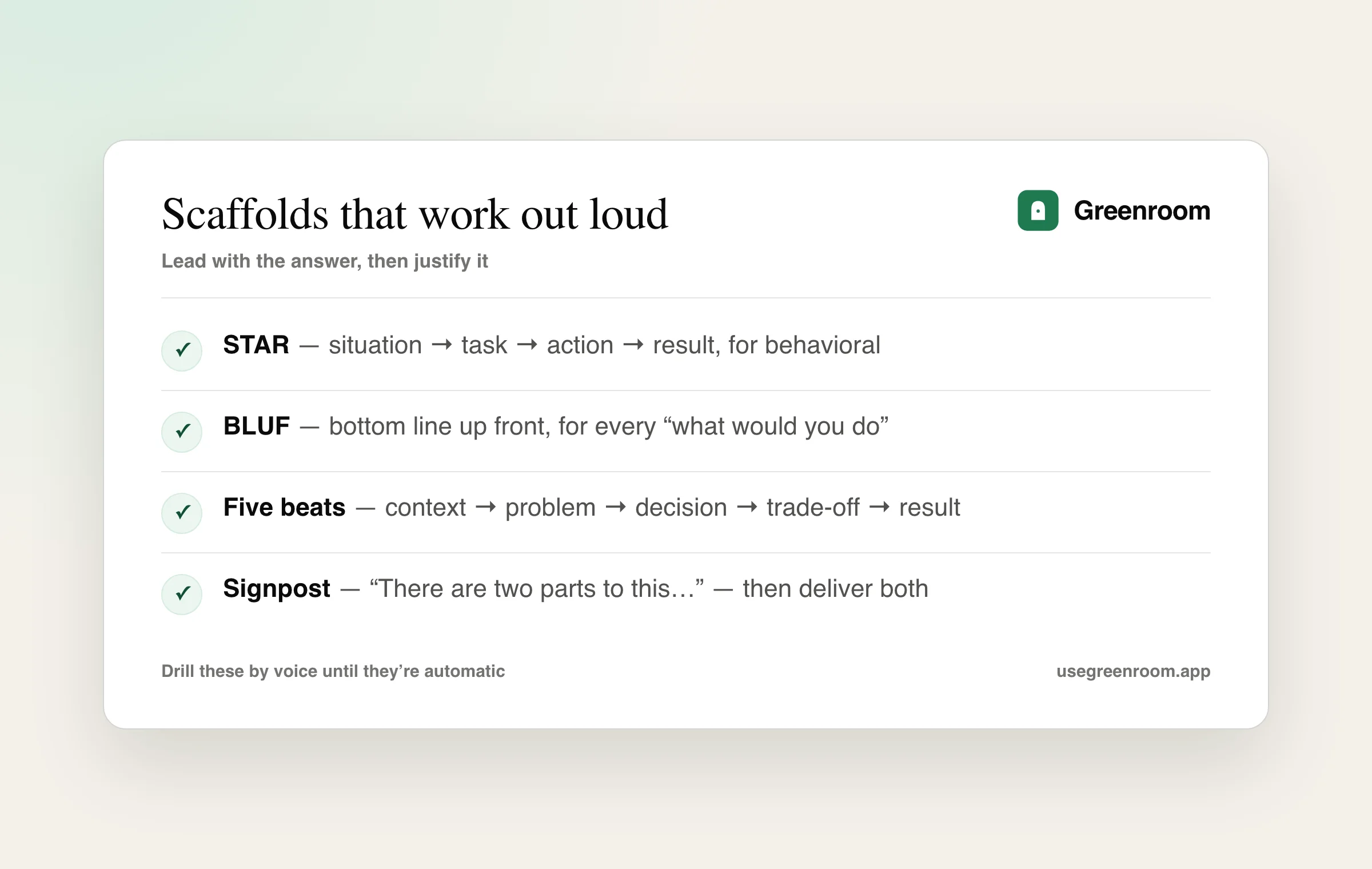
Use STAR, and make the "extra" clear
- Situation/Task — what was expected of you (the baseline).
- Action — what you did beyond that baseline, and why.
- Result — the impact, ideally quantified.
The key is contrasting the baseline expectation with what you actually did, so the "extra" is obvious.
Example answer
"My job was to ship a reporting feature. While building it, I noticed our customers were manually exporting data every week — a pain point outside my ticket. So after finishing my feature, I spent a couple of evenings adding a scheduled-export option. It wasn't asked for, but it cut a recurring support complaint to near zero and the sales team started demoing it. I'd rather solve the real problem than just close my ticket."
Mistakes to avoid
- An example that's actually just doing your normal job.
- Going "above and beyond" in a way that ignored priorities or burned you out.
- No clear contrast between expected and extra.
- No result to show it mattered.
How to deliver it
The contrast between baseline and extra is what makes this land — practise framing it out loud. Greenroom asks behavioral questions in a real voice interview with follow-ups and feedback. Pair it with our guides on leadership and STAR answers.
Frequently asked questions
How do I answer 'tell me about a time you went above and beyond?'
Use STAR and make the 'extra' obvious by contrasting the baseline expectation with what you actually did. Briefly set what was expected, then focus on the action you took beyond that — solving a problem outside your scope or going the extra mile — and end with the quantified impact. It's an ownership and initiative question, so show you solve real problems, not just close tickets.
What counts as going above and beyond?
It means doing more than your role strictly required because it was right for the customer, team or outcome — like solving a problem outside your scope, fixing something nobody asked you to, going the extra mile under a deadline, or proactively improving an experience. The key is that it exceeded the baseline expectation of your job.
What makes a weak 'above and beyond' answer?
Weak answers describe something that was actually just your normal job, going overboard in a way that ignored priorities or caused burnout, a story with no clear contrast between what was expected and the extra you did, or an example with no measurable result. Without the contrast and the impact, it doesn't demonstrate initiative.
How do I make this answer stand out?
Clearly establish the baseline expectation first so the extra effort is unmistakable, explain why you chose to go further (the real problem you saw), and quantify the impact. Reflecting that you'd rather solve the underlying problem than just complete the task strengthens it. Practise framing the contrast out loud with a voice-based mock interview.