"Tell me about a time you demonstrated leadership" trips up candidates who think leadership requires a manager title. It doesn't. Interviewers want evidence of initiative and influence — stepping up, rallying people, or driving an outcome, with or without formal authority. Here's how to answer with STAR.
Leadership without a title counts
You don't need to have managed anyone. Strong examples include: taking initiative on a problem nobody owned, mentoring a junior, driving a decision, organizing the team around a goal, or stepping up in a crisis. Influence is leadership.
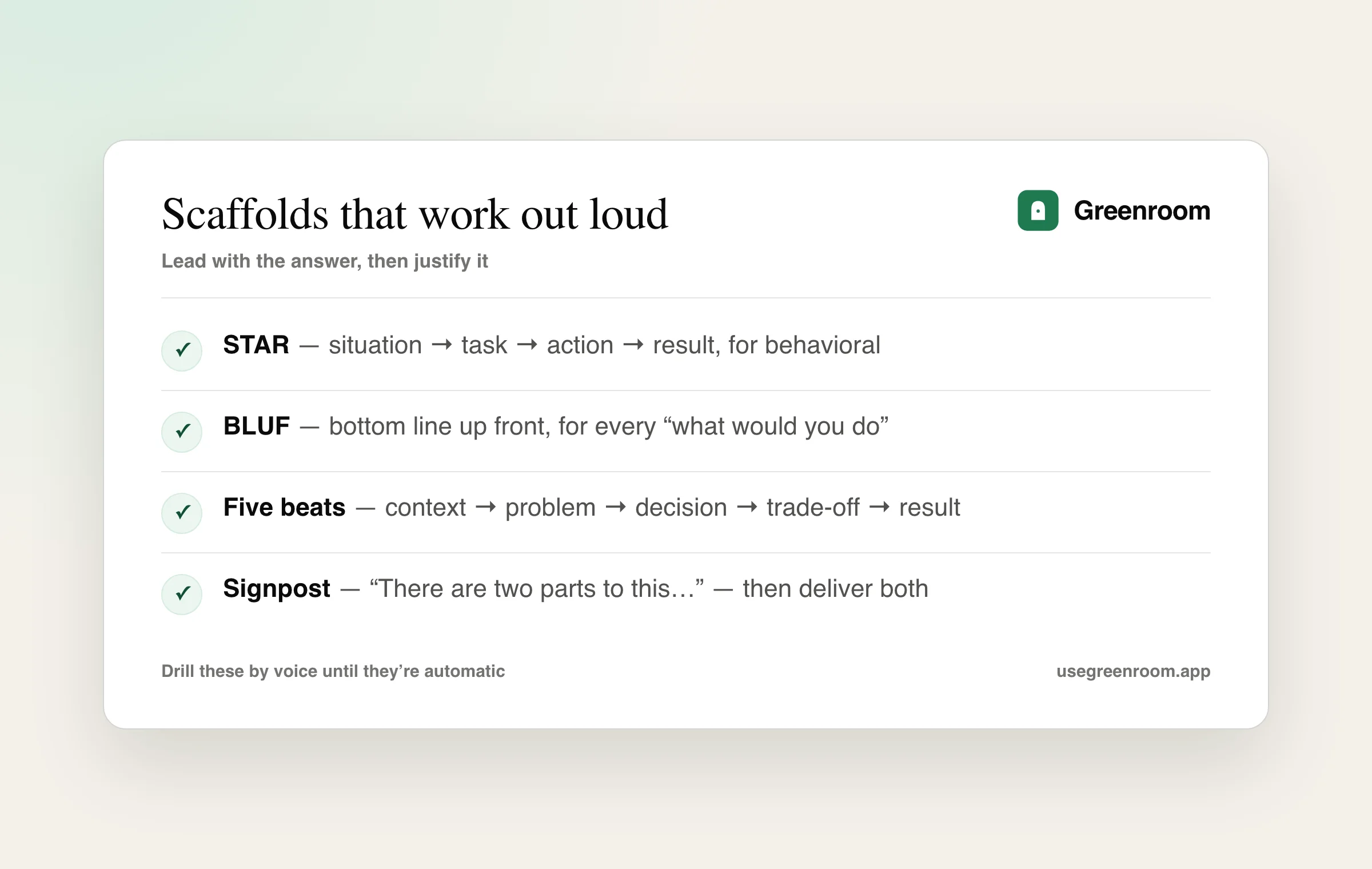
Use STAR
- Situation — the context where leadership was needed (briefly).
- Task — what needed to happen.
- Action — what you did to lead: the initiative, how you influenced others.
- Result — the outcome, ideally quantified.
Example answer
"Our team's deploys kept breaking and everyone complained but no one fixed it. I wasn't the lead, but I took it on — I mapped the failures, proposed a CI checklist, and got buy-in by walking two skeptical seniors through the data. I set up the new process and onboarded the team. Deploy failures dropped about 70% over the next quarter. I learned that leadership is often just being the person willing to own the unowned problem."
Mistakes to avoid
- "I've never been in a leadership position." — Misses the point; influence counts.
- Claiming credit for a team effort you didn't drive.
- A vague story with no clear action you took.
- No result — leadership is judged by outcome.
How to deliver it
A leadership story lands when the "I" actions are clear and confident. Rehearse it out loud. Greenroom asks behavioral questions like this in a real voice interview with follow-ups and feedback. Pair it with our guides on STAR answers and going above and beyond.
Frequently asked questions
How do I answer 'tell me about a time you showed leadership?'
Use STAR with an example of initiative and influence rather than formal authority: briefly set the situation, state what needed to happen, focus on the action you took to lead — owning the problem and bringing people with you — and end with a quantified result. Leadership without a title fully counts, so mentoring, driving a decision or stepping up in a crisis all work.
Do I need a management title to answer this question?
No. Interviewers want evidence of initiative and influence, not a manager title. Strong examples include taking ownership of a problem nobody else would, mentoring a junior, driving a decision, rallying the team around a goal, or stepping up in a crisis. Influence and ownership are what define leadership here.
What makes a strong leadership example?
A strong example shows you owned an unowned problem, took clear personal action to influence others (not just doing the work yourself), brought people along even without authority, and produced a measurable outcome. Quantifying the result and reflecting on what you learned about leadership makes it even stronger.
What should I avoid in a leadership answer?
Avoid saying you've never held a leadership position (it misses the point), claiming credit for a team effort you didn't actually drive, telling a vague story without a clear action you personally took, or leaving out the result. Leadership is judged by initiative and outcome, so those need to be front and center.