"Tell me about a conflict with a coworker" is one of the most common behavioral questions — and one of the most revealing. Interviewers aren't checking whether you've had conflict (everyone has); they're checking how you handle disagreement: with maturity and professionalism, or with blame and ego. The candidates who say "I've never had a conflict" actually fail, because it sounds evasive. Here's how to answer well.
What interviewers are scoring
- Maturity — can you disagree without making it personal?
- Communication — did you address it directly and respectfully?
- Empathy — did you try to understand the other side?
- Resolution — did it end constructively, with a working relationship intact?
Use STAR, and keep it professional
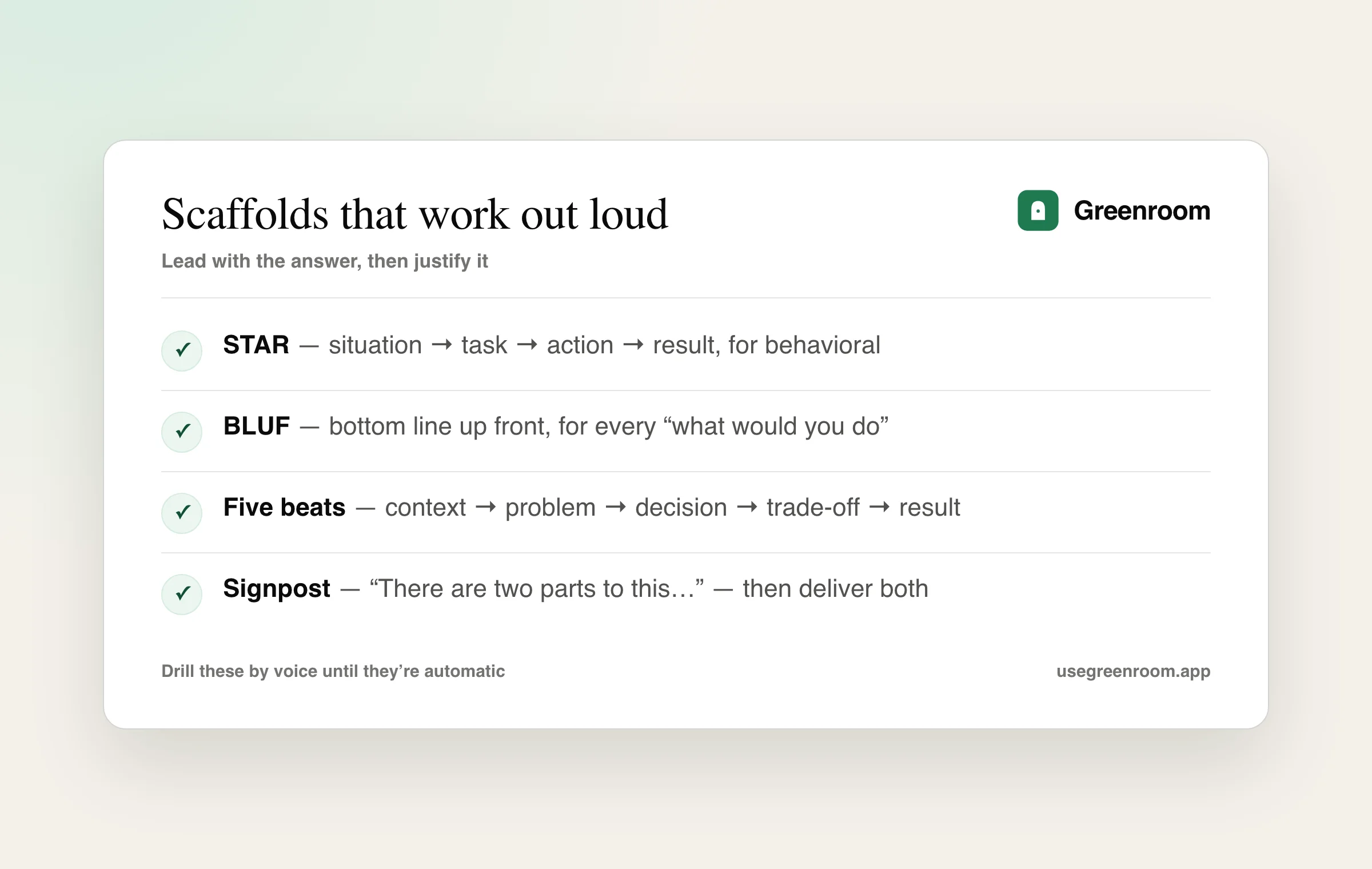
Structure it with STAR: a brief situation, the task, the action you took, and the result. Pick a real professional disagreement — a technical decision, priorities, an approach — not a personality clash or anything dramatic.
Example answer
"A senior engineer and I disagreed on whether to refactor a module or ship on top of it before a deadline. It got tense in standups. So I asked him for 20 minutes offline — I wanted to understand his reasoning, not win. It turned out he'd been burned by a rushed refactor before. I proposed a middle path: ship now with a clearly scoped refactor ticket for the next sprint. He agreed, we hit the deadline, and we actually worked better together afterward. I learned that most 'conflicts' are really two people optimizing for different risks."
Notice: real disagreement, you sought to understand first, a constructive resolution, a relationship that improved.
Mistakes that raise red flags
- "I've never had a conflict." — Sounds evasive or low-collaboration.
- Blaming the coworker entirely — you become the problem.
- A personality clash or dramatic story — too risky.
- A conflict that never actually got resolved.
- Making yourself the obvious hero and the other person an idiot.
How to deliver it
Tone is everything here — the same story sounds mature or petty depending on how you tell it. Rehearsing out loud keeps any lingering resentment out of your voice. Greenroom asks this in a real voice interview, follows up, and tells you whether you came across as mature and constructive. Pair it with our guides on behavioral questions and the failure question.
Frequently asked questions
How do I answer 'tell me about a conflict with a coworker?'
Use STAR with a real but professional disagreement — over a technical decision, priorities or approach, not a personality clash. Briefly set the situation, then focus on the action you took: communicating directly, seeking to understand the other side, and finding a constructive resolution. End with a positive outcome and an intact working relationship.
Should I say I've never had a conflict at work?
No. Claiming you've never had a conflict sounds evasive or suggests you avoid collaboration, which raises a red flag. Everyone has professional disagreements, and the question is about how you handle them. Choose a genuine, low-drama example where you behaved maturely and reached a good outcome.
What conflict example should I use?
Use a professional disagreement — a technical approach, prioritization, or process — where you sought to understand the other person, communicated respectfully, and reached a constructive resolution. Avoid personality clashes, dramatic or emotional stories, conflicts that never resolved, and any example where you blame the coworker entirely or cast yourself as the lone hero.
What do interviewers look for in the conflict question?
Interviewers score emotional maturity, direct and respectful communication, empathy for the other side, and a constructive resolution that preserved the working relationship. The strongest answers show you sought to understand before being understood and turned the disagreement into a better outcome — how you tell the story reveals how you actually handle people.