He did not have another offer. He had a first-round call scheduled with a company he had not heard back from in two weeks. But he had read somewhere that leverage matters, so he said yes, he had a competing offer, and the recruiter said "great — what's their deadline, so we can move in time?" and there followed a silence in which an entire negotiation strategy quietly died.
"Do you have any other offers?" sounds like a leverage question and is usually a logistics question. Recruiters ask it to work out how fast they need to move, not to score your desirability. Which is good news, because it means the honest answer is nearly always fine — including "no" — and the only genuinely damaging answer is the invented one, which fails at the immediate and entirely predictable follow-up about deadlines.
What the recruiter is actually asking
- Timeline. Most commonly. If you have an offer expiring Friday, their internal process has to compress or they lose you. This is an operational question and they need a real answer.
- Risk of losing you. Related but distinct: how likely are you to accept if they extend an offer. Nobody wants to spend a hiring committee slot on someone who is going elsewhere.
- Market calibration. Occasionally, they want to know what other companies think you are worth, which informs the band they propose.
- Rarely, pressure. Some recruiters use it to establish that you have no alternatives before discussing money. This is a reason to answer carefully, not dishonestly.
Knowing it is usually the first one changes the tone of your answer completely: you are helping them plan, not defending yourself.
The four honest scripts
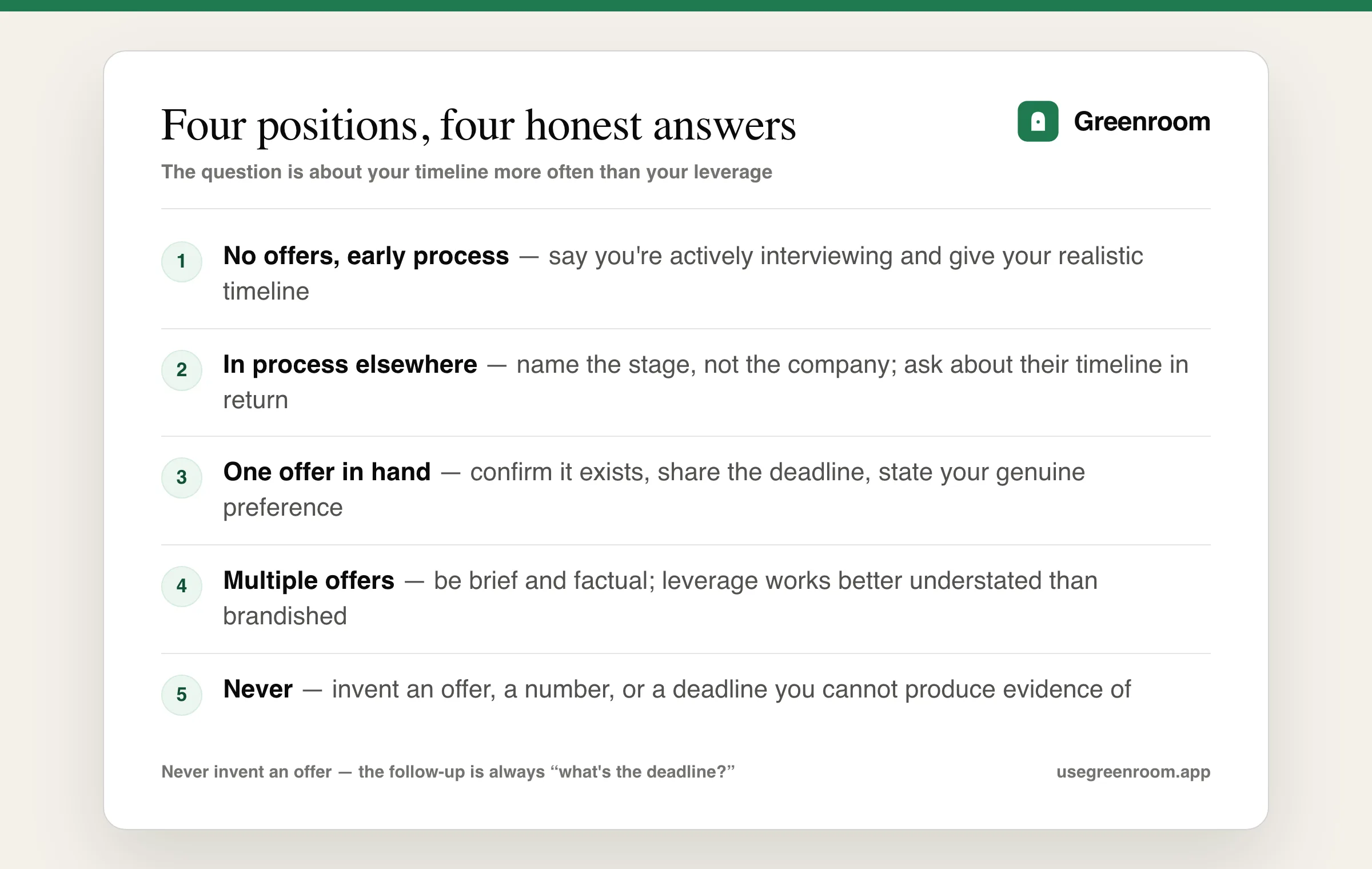
If you have no offers and are early in your search. Do not apologise for it and do not pretend otherwise. "I don't have an offer in hand right now. I'm in process with a few other companies, and I'd expect things to come together over the next three to four weeks." True, useful, and it signals you are a live candidate without inventing anything.
If you are genuinely not interviewing anywhere else — which happens, especially for freshers and for people approached directly — the clean version is: "This is the only process I'm active in at the moment. It's the role I'm most interested in, which is why I've focused on it." That reframes a lack of alternatives as focus, which is honest as long as it is true.
If you are in process elsewhere but have no offer. Name the stage, not the company. "I'm at final round with one other company and early stage with another. I'd expect a decision from the first in about two weeks." Naming companies is unnecessary and occasionally works against you — the recruiter may know exactly what that company pays, or may know the hiring manager.
If you have one offer in hand. Be factual and add your preference, because a preference stated early is worth more than a threat stated late. "I do have one offer, with a decision deadline of the 20th. I'd genuinely prefer this role — could you tell me whether your process can conclude before then?" That sentence does three things: it is honest, it gives them a real deadline, and it tells them you are winnable.
Whether to name the number is situational. Early in the process, decline politely: "I'd rather not share the specifics, but I'm happy to say the range is competitive for this level." Once you are at the offer stage and negotiating, sharing a real number is often what moves things. Our salary negotiation for software engineers guide covers the timing.
If you have multiple offers. Understate it. "Yes, I have a couple of offers to decide between. I wanted to see this process through because the work here is the closest fit." Brandishing leverage tends to make people defensive; mentioning it calmly makes them move. Our how to negotiate multiple offers guide covers running the endgame.
Never invent an offer
Three reasons, in increasing order of severity.
It fails immediately. The next question is always "what's the deadline?" or "what range are they at?", and improvising those under pressure is exactly how the story falls apart.
It can be checked. The tech hiring world, and especially India's, is smaller than it looks. Recruiters talk, and hiring managers at two companies often know each other.
It changes the relationship. If an offer is issued partly on the basis of a competing offer that does not exist, you have started the job with a lie in the file. Some Indian companies also ask for a copy of a competing offer letter before matching it, which converts an awkward bluff into an impossible one.
The India-specific version
A few things that are more common here:
- Offer-shopping is expected, and recruiters know it. Being in three processes is normal and does not read as disloyal.
- Some companies ask to see the competing offer letter. You are not obliged to share it, and declining politely is fine — "I'd rather not circulate the document, but I'm happy to tell you the fixed component" is a reasonable line.
- Ghosting after accepting is widespread, so recruiters are unusually alert to candidates who might not join. A clear, honest statement of intent is genuinely valuable to them and reflects well on you.
- Compare fixed pay, not CTC, when you describe a competing offer, or you will end up negotiating against a number that includes gratuity. Our CTC vs in-hand salary in India guide covers the components.
When you are the one asking
Turn it around. Once you have answered, ask: "What does your timeline look like from here?" and "Is there flexibility if I need a few extra days to decide?" Both are entirely normal questions, and the answers tell you how much room you actually have.
If you are waiting on this company while another offer's deadline approaches, say so early rather than at the last minute. Recruiters can often accelerate a loop by a week if they know a week matters, and they cannot do anything at all if they find out on the deadline day. Our how to follow up after no response guide covers the nudge.
Where each option actually helps
- Your recruiter — genuinely on your side on this specific question, because their job is a closed offer. Give them real information.
- AmbitionBox, Glassdoor and levels.fyi — for knowing whether the offer you have is actually competitive, before you decide how much leverage it represents.
- ChatGPT — fine for drafting the wording. It cannot rehearse the follow-up, which is the entire risk in this question.
- Greenroom — the spoken layer. Ari, the AI interviewer runs HR and recruiter-style rounds out loud and asks the deadline follow-up, which is precisely where the invented answer collapses. Honest tradeoff: Ari does not know what that company pays; levels.fyi and your network do.
Rehearse the follow-up, not the answer
Write your one-sentence answer for whichever of the four positions you are actually in. Then have someone ask the two follow-ups — "what's their deadline?" and "what range are they at?" — and answer both without hesitating or inventing.
Twenty minutes of that is worth more than any amount of reading about negotiation theory. Our HR interview questions and answers guide covers the rest of the round this question lives in.
And when you have decided: our how to decline a job offer politely guide covers saying no without burning the bridge.
Frequently asked questions
How do you answer do you have any other offers?
Answer honestly with your real timeline, then ask for theirs. If you have no offers, say you are in process with a few companies and expect things to conclude in a given number of weeks. If you have one, state that it exists, give the decision deadline, and say plainly if you would prefer this role. The question is usually about scheduling rather than leverage, so a real answer helps the recruiter compress their process for you.
Should you lie about having another offer?
No. The immediate follow-up is always about the deadline or the range, and improvising those under pressure is how the story falls apart. Some Indian companies also ask to see a competing offer letter before matching it, which turns a bluff into a dead end, and an offer extended partly on the basis of a fictional competing offer starts the job with a lie in the file.
What do you say if you have no other offers?
Say so without apologising. If you are interviewing elsewhere, name the stage and your expected timeline. If this is genuinely the only process you are running, the clean version is that it is the only one you are active in because it is the role you are most interested in, which reframes the absence of alternatives as focus. Recruiters extend offers to candidates with no alternatives constantly.
Should you tell a recruiter how much your other offer is?
It depends on timing. Early in the process it is reasonable to decline politely and say only that the range is competitive for the level. Once you are at the offer stage and actively negotiating, sharing a real number is often what moves the conversation, and in India it is worth quoting the fixed component rather than the headline CTC so you are not negotiating against gratuity and employer PF.
Is it OK to say you are interviewing elsewhere?
Yes, and it is expected — being in three processes at once is completely normal and is not read as disloyalty. Name the stage rather than the company, because naming companies adds no benefit and can occasionally work against you if the recruiter knows that company's pay bands or the hiring manager personally.
How do you ask a company to speed up because of another offer?
Say it early rather than on the deadline day. State the deadline, say you would prefer this role, and ask directly whether the process can conclude before then. Recruiters can frequently accelerate a loop by a week when they know a week matters, and they can do nothing at all if they only learn about the constraint the day before it expires.