The interviewer's question was simple: "How do you stay productive working remotely?" The candidate's honest answer, the one that actually ran through his head, was: I have, at various points, worked from a bed, a kitchen counter balanced on a yoga block, and once — memorably, briefly — a parked car outside a co-working space that turned out to be closed for a holiday nobody told him about. What he said out loud instead was a much safer "I have a dedicated workspace and a consistent routine," which was true, technically, but also the kind of answer that tells an interviewer nothing they couldn't have guessed, when what they were actually trying to find out was whether this person can be trusted to do good work with nobody watching, across a time zone gap, without daily check-ins.
Remote interviews look like ordinary interviews with a video call instead of an office, but they're quietly testing a different set of muscles, and most candidates prepare for the wrong ones.
What remote interviews are actually evaluating
Beyond the role's core technical or domain skills, remote-specific rounds (or remote-specific questions inside an otherwise normal loop) are usually probing:
- Self-direction — can you make progress and unblock yourself without someone physically nearby to ask?
- Async communication — can you write a status update, a PR description, or a Slack message that gives a teammate in a different time zone everything they need, without a follow-up thread of clarifying questions?
- Time zone discipline — have you actually thought through the overlap (or lack of it) with the team, and do you have a realistic plan for the gaps?
- Trust under low visibility — will you flag blockers and slipping timelines proactively, or wait to be asked?
"I'm disciplined and I don't need supervision" is the answer everyone says. It's forgettable precisely because it's unfalsifiable. What lands is a specific story that demonstrates the trait without naming it.
Answering "how do you stay productive remotely?" with a real example
Compare the generic version above to something like: "On my last team, my manager and I were six hours apart, so we agreed I'd send a written end-of-day summary covering what shipped, what's blocked, and what's next — not because anyone asked me to, but because I'd been burned before by a teammate finding out about a blocker a day later than they needed to. That habit meant my manager could unblock me asynchronously overnight instead of waiting for a live call the next day." Same underlying claim — disciplined, communicates well — but now it's falsifiable, specific, and shows the behavior instead of asserting it. This is the same gap our guide on talking through code like a senior engineer covers for technical rounds: specificity is what separates a forgettable answer from a believable one.
Time zone questions: have a real answer, not a vibe
If the team spans time zones, expect "how would you handle the overlap?" Don't wing this. Before the interview, work out the actual gap (not a rounded guess) and have a concrete plan: which hours you'd shift to cover, what you'd handle async vs. live, and how you'd structure handoffs if there's genuinely minimal overlap. An answer like "I looked at the time difference and there's about a 3-hour overlap most weekday mornings my time — I'd plan to be online then for syncs, and treat the rest of the day as deep-work and async-first" reads as someone who already thinks like a remote employee, not someone hoping the question won't come up.
Your setup is graded too, briefly
This is a smaller signal than the substance of your answers, but it's not nothing: stable internet, a quiet background, your face actually lit and visible, and a camera at eye level rather than pointed up your nose from a laptop on a low table. None of this should take more than ten minutes to fix once, and it removes a distraction that otherwise competes with your actual answers for the interviewer's attention. Our video interview tips guide covers the specifics; treat it as a one-time setup cost, not something to think about during the call.
Remote interview prep vs. general interview prep
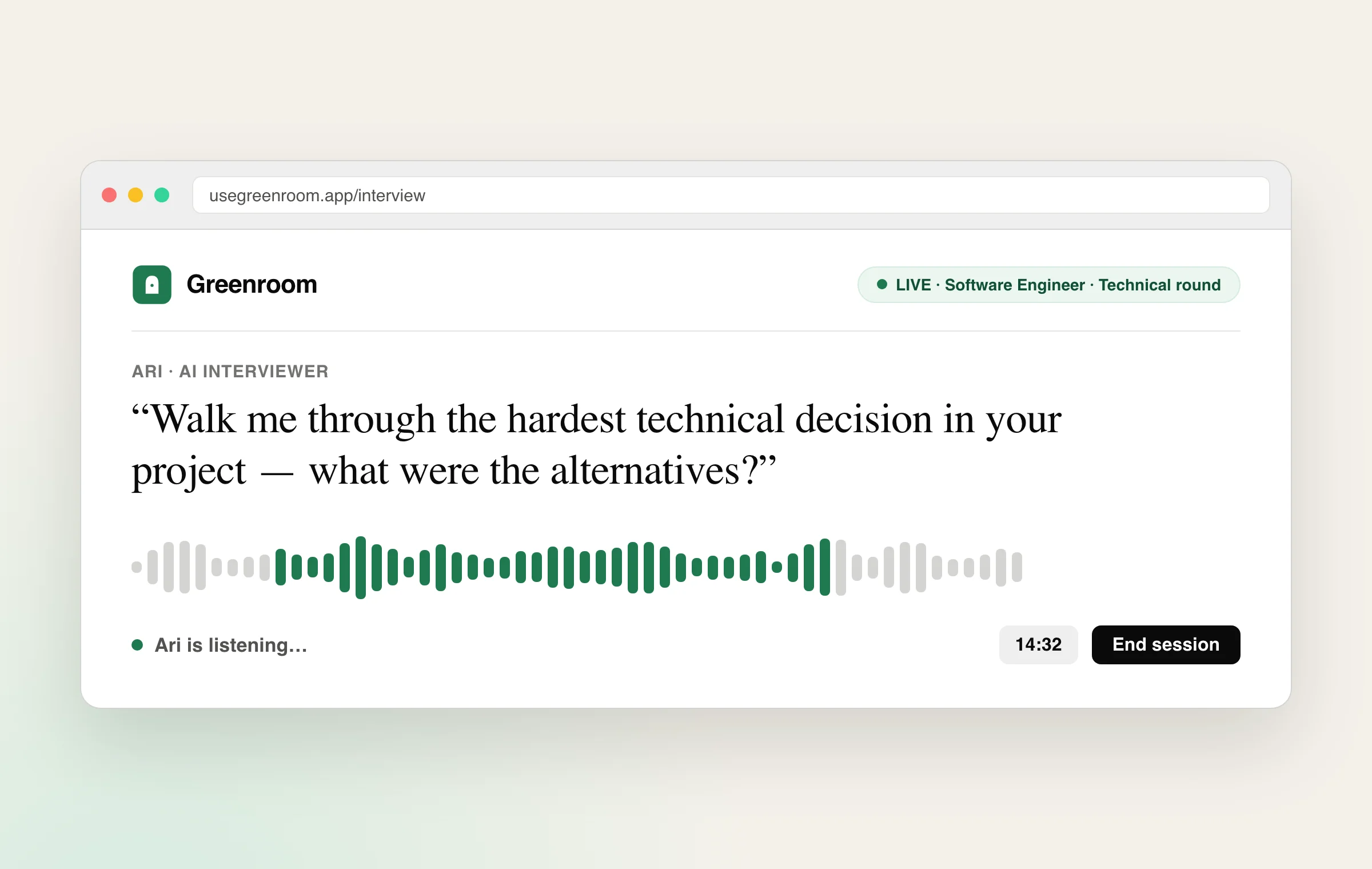
Most interview-prep content — practice questions, STAR templates, a friend's mock session — is built for in-person or generic video interviews and simply doesn't cover the remote-specific layer: time zone planning, async-communication examples, or how to talk about a fully distributed work history without it sounding like a gap or a red flag. A general mock with a friend will catch a rambling answer; it usually won't think to ask "how would you handle a six-hour overlap" unless they've actually worked remote themselves. Practicing against questions that specifically probe self-direction and async habits — out loud, with follow-ups — closes a gap that generic prep leaves wide open.
Pairing this with the rest of your prep
Treat remote-specific questions as one more category alongside behavioral and technical prep, not a separate track. Our guides on preparing for a mock interview and telephonic interview tips cover the format mechanics; layer the self-direction and async-communication examples from this post on top, and rehearse them out loud the same way you'd rehearse a behavioral STAR answer — because that's effectively what they are.
If the role is office-based and you are not, our are you willing to relocate guide covers how to say so without ending the conversation.
If the role is office-based rather than remote, our office mandate questions in interviews guide covers answering and negotiating the attendance question.
Frequently asked questions
What do remote job interviews actually test, beyond the role's skills?
Remote-specific questions usually probe self-direction (can you make progress without someone nearby to ask), async communication (can you write status updates and messages that don't require follow-up clarification), time zone discipline (have you actually planned for the overlap with the team), and trust under low visibility (do you proactively flag blockers). These are distinct from the role's core technical or domain skills, which are still assessed separately.
How do I answer 'how do you stay productive working remotely?'
Avoid generic, unfalsifiable answers like 'I'm disciplined and have a routine.' Use a specific story that demonstrates the trait — for example, describing a concrete habit you built (like a written async end-of-day summary) and the real problem it solved, rather than just asserting that you're self-directed.
Should I have a plan for time zone overlap before a remote interview?
Yes. Work out the actual time difference with the team beforehand and prepare a concrete plan for which hours you'd cover live, what you'd handle async, and how you'd structure handoffs given the real overlap (or lack of it). A specific, calculated answer reads as someone who already thinks like a remote employee.
Does my video call setup matter in a remote interview?
It matters as a smaller, secondary signal — stable internet, good lighting, a quiet background, and eye-level camera placement remove distractions that otherwise compete with your actual answers for attention. It's a one-time setup cost worth fixing before the interview, not the main thing being evaluated.
How is remote interview prep different from general interview prep?
General prep (practice questions, STAR templates, a friend's mock session) usually doesn't cover the remote-specific layer: time zone planning, async-communication examples, or talking about a distributed work history. Practicing specifically against self-direction and async-habit questions, out loud and with follow-ups, closes a gap that generic prep typically leaves open.