The telephonic interview is the gate before everything else — fail it and you never reach the technical or HR rounds. And it's deceptively hard, because you lose every visual tool you'd normally lean on. No eye contact, no smile, no body language. On the phone, your voice carries 100% of the impression. That changes how you prepare. Here's how to pass.
Why phone screens are their own skill
The recruiter or hiring manager is usually checking three things fast: can you communicate clearly, do your basics check out, and are you genuinely interested and available? Because they can't see you, awkward silences feel longer, mumbling kills you, and low energy reads as disinterest. You have to compensate with your voice.
Before the call
- Find a quiet space with full signal. A dropped call or background noise is an instant strike. Use earphones with a mic.
- Keep your resume, the job description, and notes in front of you. This is the one interview where notes are an unfair advantage — use it.
- Have water nearby and a glass of water; a dry, croaky voice undersells you.
- Stand up or sit upright. Posture genuinely changes how your voice sounds — more energy, more projection.
The first 60 seconds
Open warm and clear: "Hi [name], thanks for the call — I'm doing well, looking forward to this." Then when they ask you to introduce yourself, deliver a tight 30-second pitch (here's how to structure it). Smile while you talk — yes, they can hear it. It warms your tone instantly.
During the call
- Slow down. Nerves speed you up; on the phone that turns into a mumble. Deliberate pace reads as confidence.
- Don't talk over them. Without visual cues, you'll occasionally clash — pause half a second longer before responding.
- Use verbal signposting. "There are two parts to this…" helps them follow you without seeing your face.
- Confirm you're still there during long thinking pauses — "let me think about that for a second" beats dead air.
How to practise
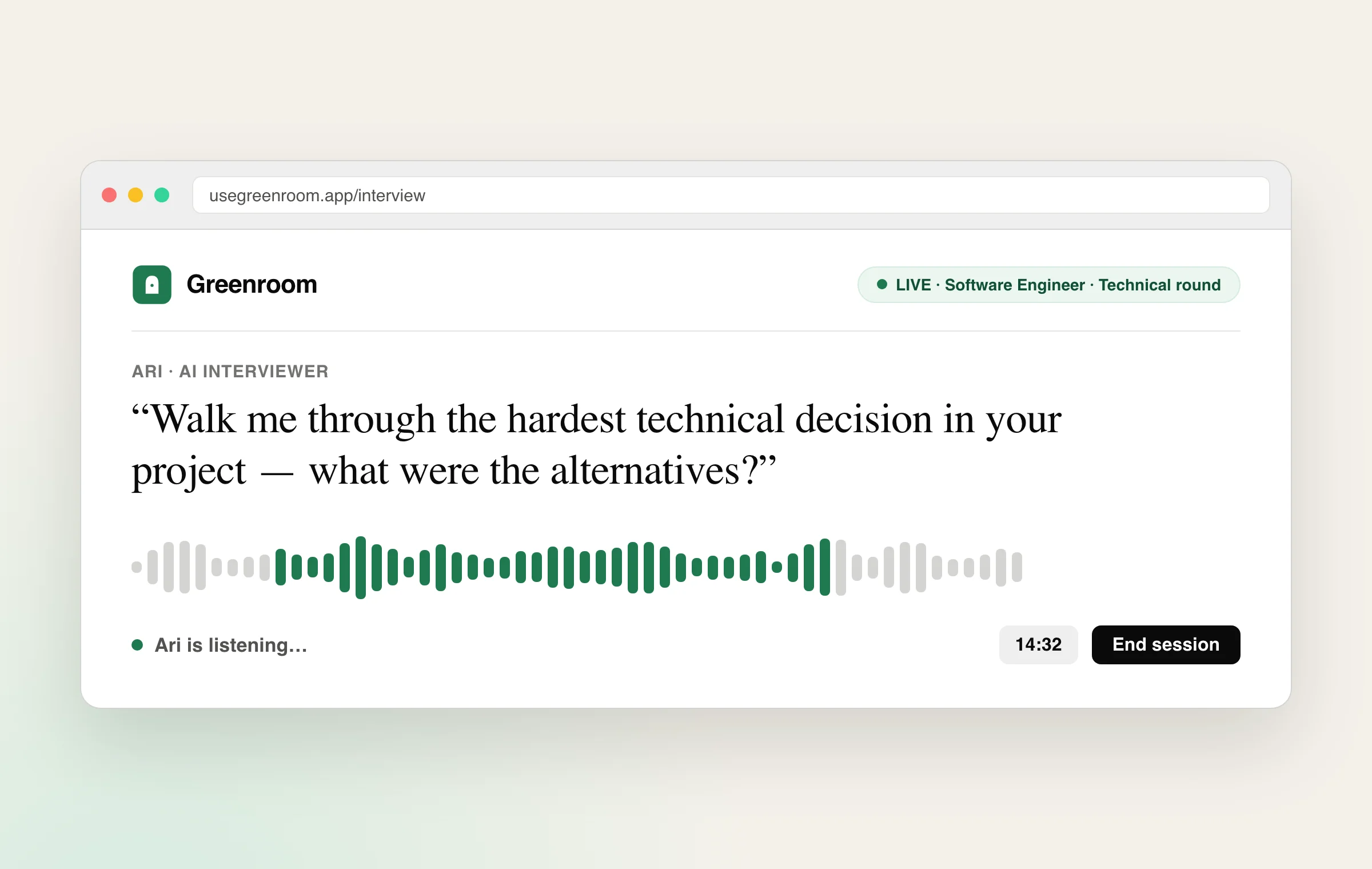
Here's the thing: a phone screen is voice-only, so practising on paper or in your head trains the wrong muscle. You need to rehearse speaking — your intro, your answers, your pacing — and hear yourself back. Greenroom is a voice-first interview trainer: it runs a real spoken interview and gives you feedback on pace, filler words and clarity — the exact things a phone screen judges. Pair it with our guides on speaking confidently and video interviews.
For what actually gets asked on that call, see our first round interview questions and answers guide.
Frequently asked questions
How do I prepare for a telephonic interview?
Find a quiet space with full signal and use earphones with a mic, keep your resume, the job description and notes in front of you (a phone screen is the one interview where notes help), have water nearby, and sit upright or stand to give your voice more energy. Because they can't see you, preparation that improves your voice matters most.
What should I say in the first 60 seconds of a phone interview?
Open warm and clear — thank them for the call and say you're looking forward to it — then deliver a tight 30-second self-introduction when asked. Smile while you speak, because it audibly warms your tone. The opening sets the energy for the whole call, so sound confident and genuinely interested from the first sentence.
Why are telephonic interviews harder than in-person?
On the phone you lose every visual tool — eye contact, smile, body language — so your voice carries the entire impression. Awkward silences feel longer, mumbling is more damaging, and low energy reads as disinterest. You have to compensate with deliberate pace, warm tone and clear signposting that you wouldn't need face to face.
How can I practise for a phone screen?
Practise by speaking out loud — your intro, your answers and your pacing — and listen back, since a phone screen is voice-only and silent prep trains the wrong muscle. A voice-first mock interview that gives feedback on your pace, filler words and clarity rehearses the exact skills a telephonic interview judges.