LinkedIn runs a polished, FAANG-tier interview: strong data-structure and algorithm rounds, system design at social-network scale, and a behavioral round that maps to its culture. The bar is high but the structure is predictable. Here's how to prepare.
The LinkedIn interview process
- Recruiter screen — background and logistics.
- Technical phone screen — coding on a shared editor.
- On-site loop — two to three coding rounds, a system design round, and a "host"/behavioral round.
LinkedIn coding questions
- Arrays, strings, hash maps — two-pointer, sliding window, intervals.
- Trees and graphs — BFS/DFS, which fit LinkedIn's social-graph domain.
- Heaps and recursion — top-K, merge problems.
- Clear narration expected (our guide).
LinkedIn system design
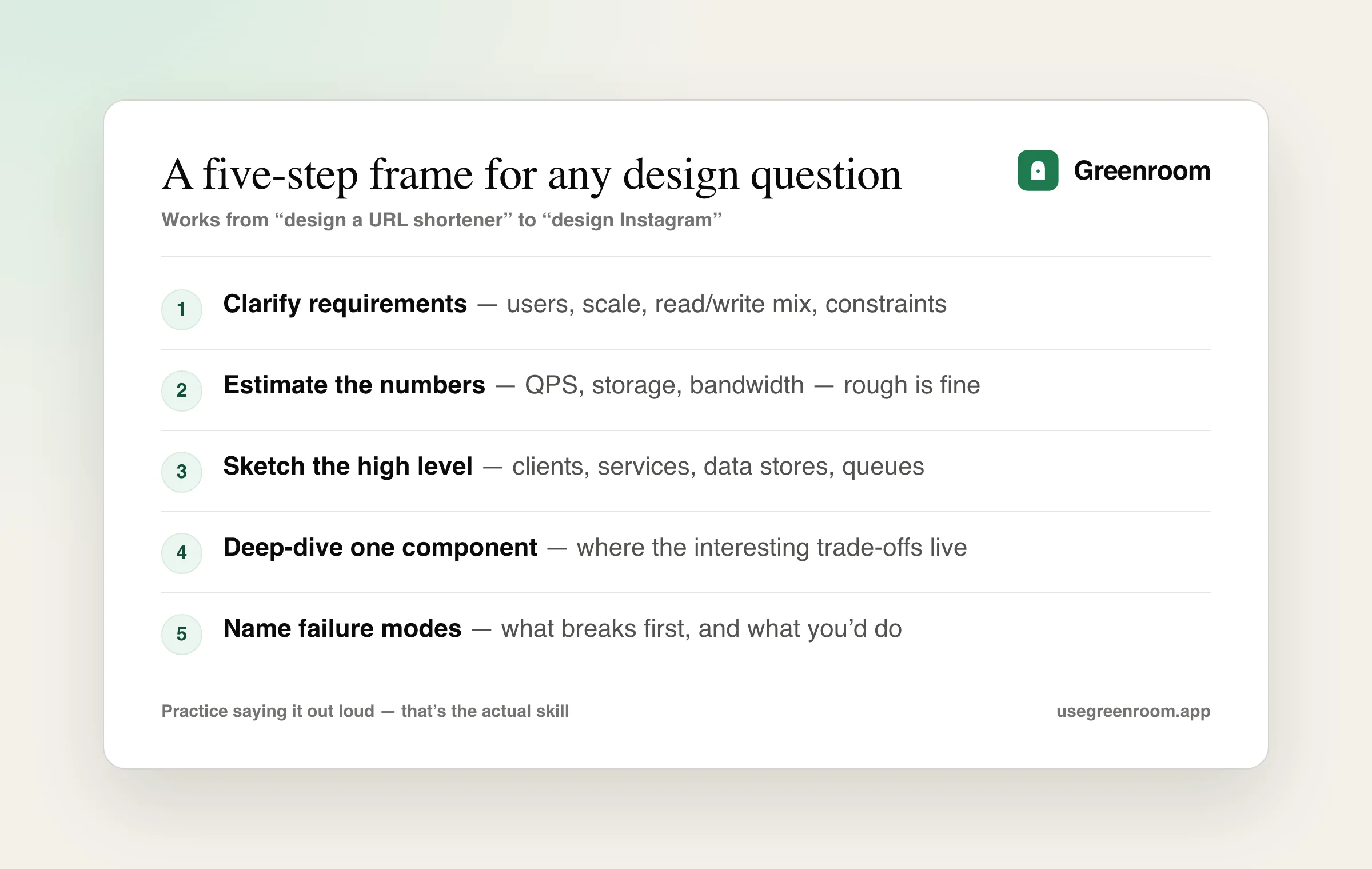
Expect scale-flavored prompts: design a news feed, a "people you may know" service, a messaging system, or a notification service. They want requirements, data modeling, scaling (sharding, caching), and trade-offs. See our system design guide.
LinkedIn behavioral ("host") round
Expect questions on collaboration, impact, handling conflict, and a project you're proud of. Answer in STAR and quantify impact.
How to prepare
System design and behavioral are spoken skills. Practise narrating designs and telling impact stories out loud. Greenroom runs spoken interviews with live follow-ups and feedback. Pair it with our FAANG prep guide.
Frequently asked questions
What is the LinkedIn interview process?
LinkedIn's process includes a recruiter screen, a technical phone screen with coding on a shared editor, and an on-site loop of two to three coding rounds, a system design round, and a 'host' behavioral round. It's a FAANG-tier loop with a high but predictable bar.
What system design questions does LinkedIn ask?
LinkedIn favors scale-flavored prompts drawn from its product: design a news feed, a 'people you may know' service, a messaging system, or a notification service. Interviewers want clear requirements, data modeling, a scaling plan (sharding, caching) and an honest discussion of trade-offs at social-network scale.
What coding questions does LinkedIn ask?
LinkedIn asks arrays, strings and hash map problems (two-pointer, sliding window, intervals), trees and graphs (BFS/DFS, fitting its social-graph domain), and heap and recursion problems like top-K and merges. Clear narration of your approach is expected throughout the coding rounds.
How should I prepare for a LinkedIn interview?
Practise data-structure and algorithm problems with clear narration, rehearse social-graph-flavored system design, and prepare impact-driven behavioral stories in STAR format. Since system design and behavioral are spoken skills, practising them out loud with a voice-based mock interview that gives live follow-ups closely matches LinkedIn's loop.