Apple's interview is different from the other big-tech loops in one important way: you don't interview for "Apple" — you interview for a specific team. That changes everything about how you should prepare. The questions skew toward genuine depth in the area you're being hired for, the bar on fundamentals is high, and "culture fit" with a famously secretive, craft-obsessed company is real. Here's how to prepare.
The Apple interview process
- Recruiter screen — background and team fit.
- Technical phone screen — one or two coding problems, often domain-flavored.
- On-site loop — typically 4–6 rounds with the team you'd join: coding, system or domain design, and several conversations that blend technical depth with behavioral.
Because it's team-based, the exact mix varies a lot. A low-level/embedded team will grill you on memory and concurrency; an app team will go deep on Swift, UIKit/SwiftUI and performance.
Apple coding & fundamentals questions
- Solid data-structure and algorithm problems — arrays, strings, trees, graphs, recursion.
- Deep fundamentals in your domain — memory management, pointers, concurrency, OS concepts for systems roles.
- Language depth — they'll probe how well you actually know your primary language, not just syntax.
- Debugging and edge-case thinking — Apple cares a lot about correctness and quality.
Apple system / domain design
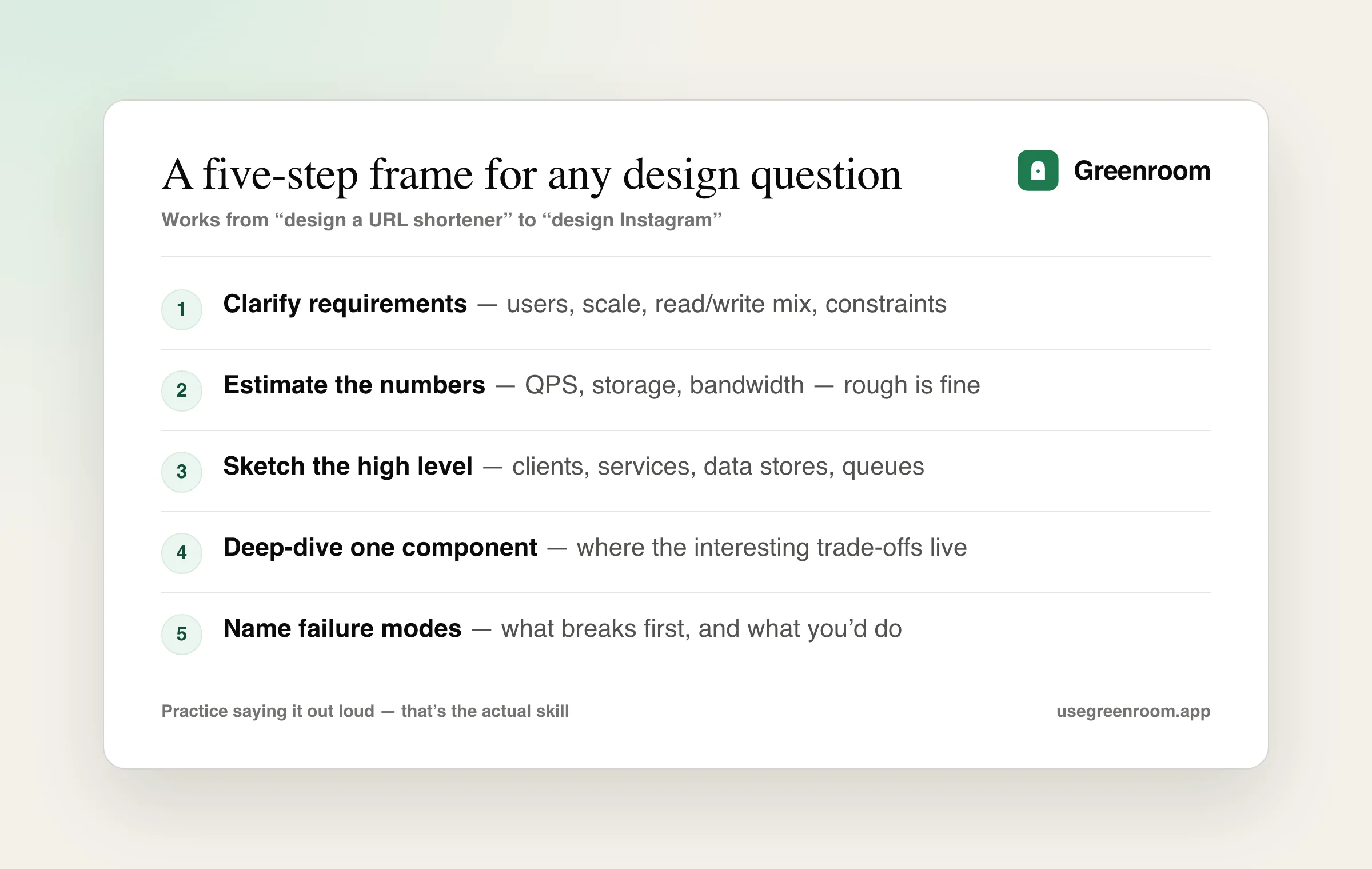
For experienced roles you'll get a design round tuned to the team — design a feature, a framework API, a data sync system, or a component architecture. They want clean abstractions, attention to detail, and a discussion of trade-offs and failure modes. Our system design guide covers the framework.
Apple behavioral & culture
Apple looks for people who care deeply about craft, can collaborate inside a secretive environment, and have strong opinions held with humility. Expect:
- Tell me about a project you're genuinely proud of — and why.
- Describe a time you obsessed over quality or detail.
- How do you handle disagreement on a technical approach?
- Why Apple, and why this team specifically?
How to prepare
The coding you grind; the part candidates underweight is articulating depth out loud — explaining your domain decisions and your proudest work crisply under follow-up questions. That only sharpens with spoken reps. Greenroom runs a real voice interview that pushes on your reasoning and behavioral stories with live follow-ups. Pair it with our FAANG prep guide.
For the server-side loop in detail, see our Apple backend interview questions guide, including why the process varies so much between teams and how privacy shows up in the design round.
For the web loop specifically, see our Apple frontend interview questions guide, covering browser depth, accessibility and the cross-functional round.
Frequently asked questions
How is the Apple interview different from other big tech?
At Apple you interview for a specific team rather than the company in general, so the questions skew toward real depth in that team's domain. A low-level team probes memory, concurrency and OS concepts, while an app team goes deep on Swift and performance. Fundamentals and craftsmanship matter more than broad generalist coverage.
What coding questions does Apple ask?
Apple asks solid data-structure and algorithm problems — arrays, strings, trees, graphs and recursion — plus deep fundamentals in your domain like memory management, pointers and concurrency, and genuine depth in your primary language. They care heavily about correctness, edge cases and code quality, not just reaching an answer.
Does Apple have a system design round?
Yes, for experienced roles Apple includes a design round tuned to the team — designing a feature, a framework API, a data sync system or a component architecture. Interviewers look for clean abstractions, attention to detail, and a clear discussion of trade-offs and failure modes rather than a generic large-scale system.
How should I prepare for an Apple interview?
Grind data-structure and algorithm problems, but invest heavily in your domain depth and in explaining your technical decisions and proudest work out loud, since Apple probes depth under follow-ups. A voice-based mock interview that pushes on your reasoning and behavioral stories is the closest match to Apple's team-based loop.