Stripe's interview is famous for being unusually practical. Instead of abstract algorithm puzzles, you often build something real — implement an API, integrate against one, or extend a working codebase. It's a deliberate test of how you actually engineer, not just whether you can solve LeetCode. Here's how to prepare.
The Stripe interview process
- Recruiter screen — background and motivation.
- Technical phone screen — a practical coding problem.
- On-site loop — practical/integration coding, system design, a debugging round, and a behavioral round.
Stripe's practical coding rounds
- Implement or consume an API — realistic, multi-step problems.
- Work in a real codebase — read, extend, and debug existing code.
- Handle edge cases, errors, and clean structure — they care about production-quality code.
- Strong fundamentals still matter, but applied (our backend guide).
Stripe system design
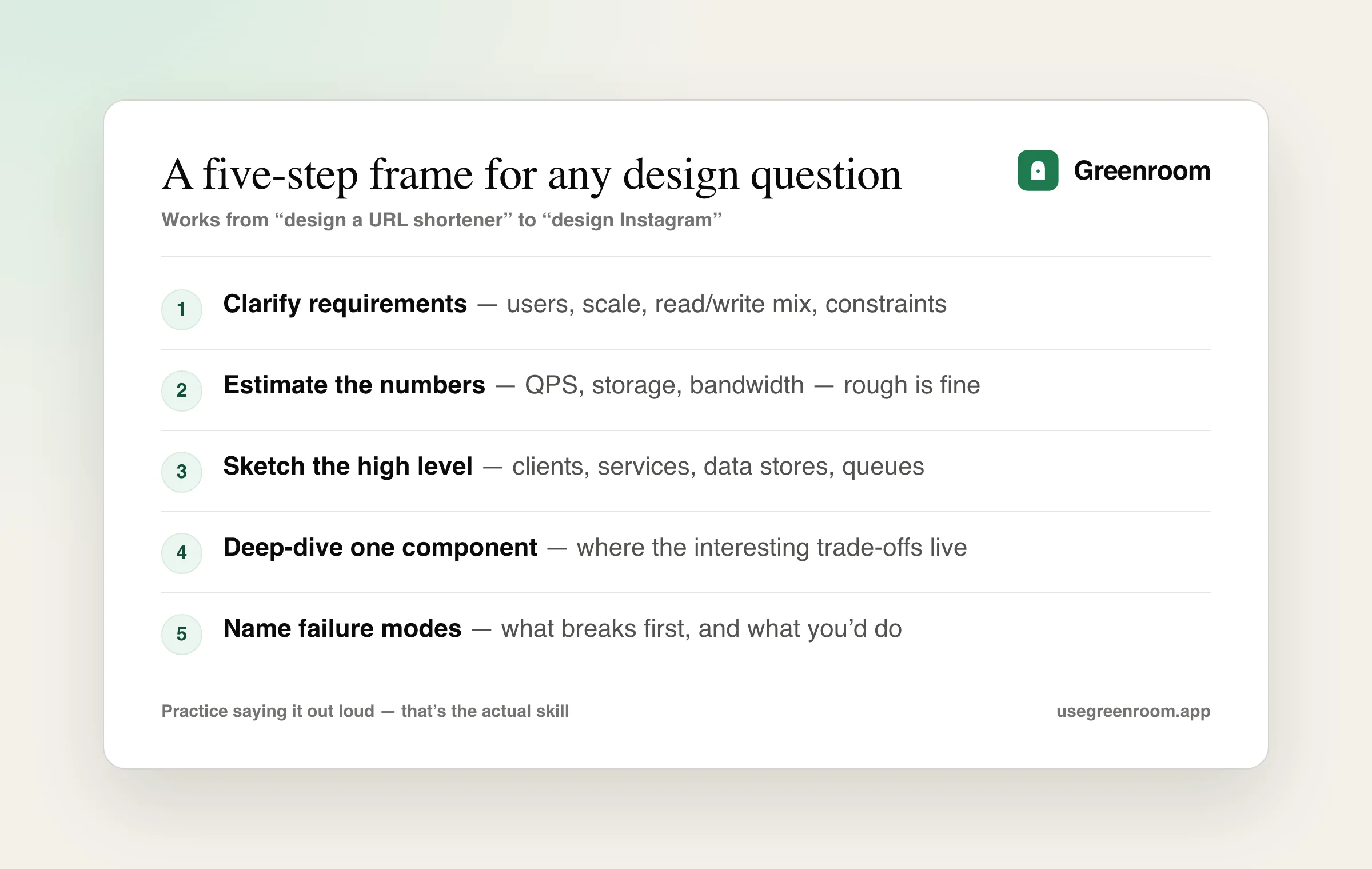
Payments-flavored: design a billing system, a subscription engine, an idempotent payment API, or a webhook delivery system. They care deeply about correctness, idempotency, and reliability — money can't be lost or double-charged. See our REST API guide.
Stripe behavioral
Expect questions on craftsmanship, ownership, and working with users/developers. Answer in STAR.
How to prepare
Practise reasoning through realistic, applied problems out loud and explaining your design and error-handling choices. Greenroom runs spoken technical interviews that follow up on your reasoning. Pair it with our backend and REST API guides.
Frequently asked questions
What is unique about the Stripe interview?
Stripe's interview is unusually practical — instead of abstract algorithm puzzles, you often build something real: implement or consume an API, extend a working codebase, or debug existing code. It's a deliberate test of how you actually engineer, emphasizing production-quality, correct code over clever LeetCode-style solutions.
What coding questions does Stripe ask?
Stripe asks realistic, applied problems: implementing or integrating against an API in multi-step tasks, reading and extending real code, and handling edge cases, errors and clean structure. Strong fundamentals still matter, but they're tested in an applied, production-minded way rather than through abstract puzzles.
What system design questions does Stripe ask?
Stripe favors payments-flavored design prompts like a billing system, a subscription engine, an idempotent payment API, or a webhook delivery system. Interviewers care deeply about correctness, idempotency and reliability, since payment systems can't lose money or double-charge under retries and failures.
How should I prepare for a Stripe interview?
Practise realistic, applied problems — building and integrating APIs and debugging real code — rather than only abstract algorithms, and focus on clean, correct, production-minded solutions with good error handling. Rehearse explaining your design and edge-case decisions out loud with a voice-based mock interview, since Stripe's rounds are practical and conversational.