LeetCode से बेहतर प्रैक्टिस के तरीके exist) and most Indian engineers prepping for coding interviews do not know about them. This guide covers dsa interview preparation from the ground up: what to study, in what order, with what resources, and how to practice in a way that actually transfers to the real interview room.
The dirty secret of coding interview practice india communities is that volume of problems solved is a vanity metric. What matters is depth of understanding per problem, and the ability to explain your approach under pressure. Two hundred problems solved with genuine understanding beats five hundred solved by memorization every time.
What DSA topics actually appear in product company interviews
Not all DSA is interview-relevant. Here is an honest breakdown of what shows up and how often, based on patterns across Google, Meta, Amazon, Flipkart, Razorpay, Zepto, and similar companies hiring in India:
- Arrays and strings, Very high frequency. Two pointers, sliding window, prefix sums.
- Trees (binary trees, BST), Very high frequency. Traversals, LCA, path problems.
- Graphs, High frequency at senior levels. BFS, DFS, topological sort, Dijkstra.
- Dynamic programming, High frequency. 1D DP, 2D DP, interval DP.
- Heaps and priority queues, Medium frequency. Top-K, median problems.
- Tries — Lower frequency, high signal when it appears. Word search, prefix matching.
- Bit manipulation, Low frequency but common at Google. XOR tricks, bitmasks.
Focus your first two months on the top four. Add heaps and tries in month three. Do not touch segment trees or Fenwick trees unless you are targeting competitive programming-heavy companies.
LeetCode alternatives India: what to use instead (or alongside)
LeetCode is the default but it is not the only option, and for many Indian engineers it is not the best starting point. Here are the real leetcode alternatives india worth your time (our full LeetCode Premium alternatives guide compares all nine, with INR pricing):
Striver's A2Z DSA Sheet
Built by a former Flipkart engineer, this sheet is structured specifically for Indian product company interviews. It covers 455 problems in a logical progression from basics to advanced. Free, comprehensive, and extremely well-organized. If you are starting from zero, begin here, not on LeetCode.
NeetCode 150
150 curated problems with video explanations for each. The explanations are exceptional. They do not just show the solution, they show the thought process. For engineers who struggle with "how did they even think of that?" this resource fixes the gap.
AlgoExpert
Paid (around $100/year), but the quality is high. Questions are well-curated, solutions come with complexity analysis, and the difficulty progression is honest. Worth it if you can afford it and prefer structured video walkthroughs.
GeeksForGeeks (GFG)
The most widely used platform in India for DSA practice. Quality varies wildly, some solutions are suboptimal or poorly explained. Use GFG for concept reference and Indian company-specific question archives, not as your primary practice platform.
How to practice DSA so it sticks
Most engineers practice DSA wrong. They look at a problem, read the solution after 10 minutes, convince themselves they understood it, and move on. Three weeks later they cannot solve a similar problem. Here is the method that actually builds the skill:
- Attempt first, always. Spend 20–30 minutes genuinely trying before looking at any hint. The struggle is where the learning happens.
- Categorize the pattern. After solving (or reading the solution), write down in one sentence what pattern this problem uses. "This is a sliding window problem where the window expands right and shrinks left when the constraint is violated."
- Explain it out loud. Before moving to the next problem, explain your solution to yourself or someone else as if you are in an interview. This is the single highest-leverage practice habit.
- Revisit after 3 days. Come back to hard problems without looking at your solution. If you cannot reproduce it, the understanding was not deep enough.
The communication gap most people ignore
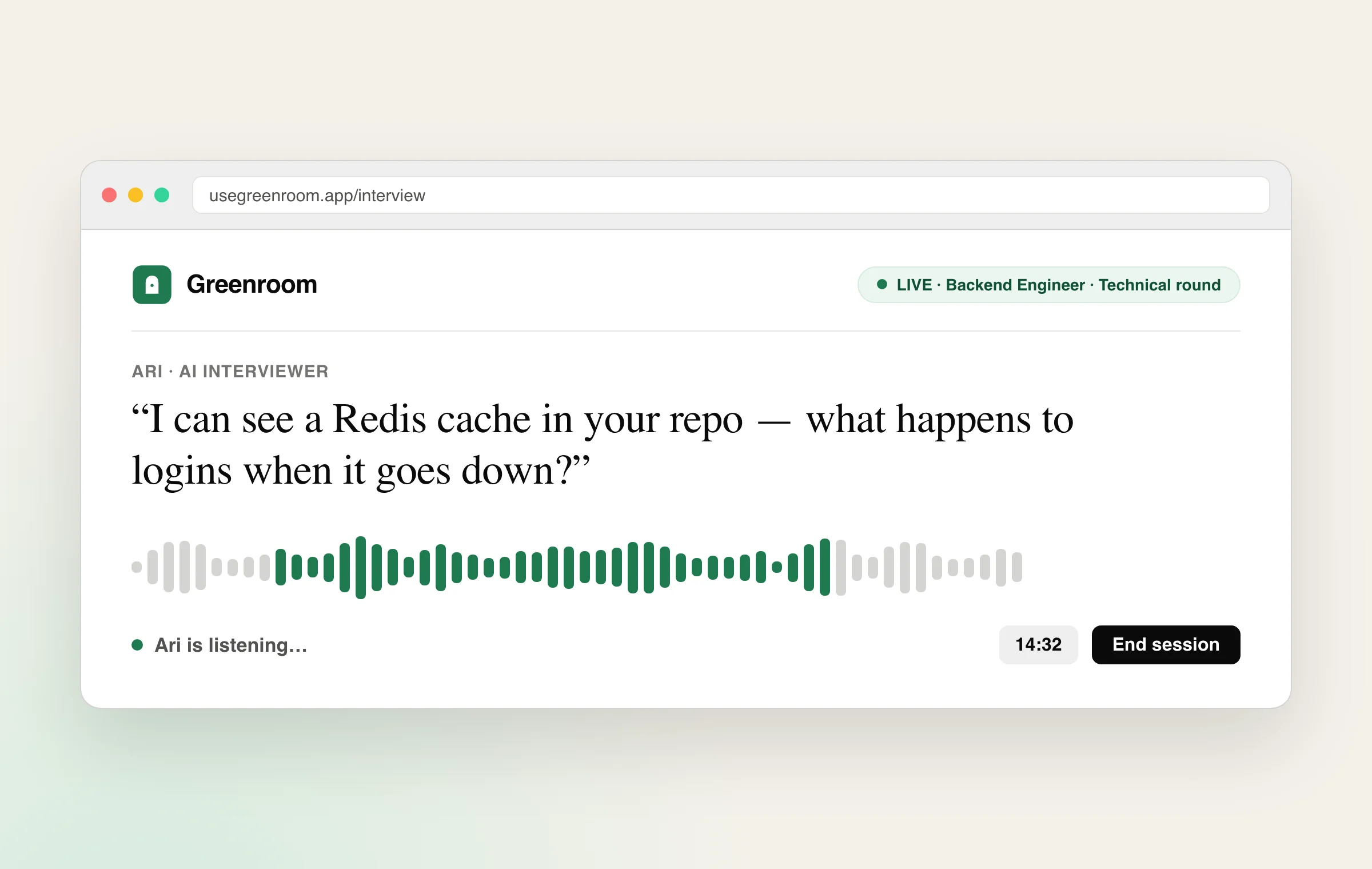
Solving DSA problems alone is not enough for coding interview practice india. The real interview adds a layer that solo practice cannot replicate: you must think out loud, handle an interviewer's clarifications, and pivot when your first approach is wrong, all in real time.
This is a separate skill from problem-solving. Engineers who are brilliant at solo problem-solving regularly fail interviews because they go silent for five minutes, then present a solution without explaining their thinking. Interviewers need to see your process, not just your output.
Practice narrating while you solve. Say things like: "I'm going to start with a brute force to make sure I understand the problem before optimizing." "I think there's a DP pattern here but let me verify with a small example first." "The edge case I'm worried about is an empty input." This kind of narration is what interviewers at product companies are looking for.
Realistic timeline for DSA prep
- Week 1–2: Arrays, strings, two pointers, sliding window (30 problems)
- Week 3–4: Linked lists, stacks, queues, binary search (30 problems)
- Week 5–6: Trees: traversals, BST operations, path problems (30 problems)
- Week 7–8: Graphs: BFS, DFS, topological sort (25 problems)
- Week 9–10: Dynamic programming: 1D and 2D (30 problems)
- Week 11–12: Heaps, tries, revision, mock interviews (30 problems + 6 mocks)
Frequently asked questions
How many months of DSA prep do I need for product company interviews?
Three to six months of consistent practice for most working engineers: roughly two months on patterns and fundamentals, then a mix of timed practice and mock interviews. Cramming 500 problems in six weeks reliably fails.
Which DSA topics actually appear in Indian product company interviews?
Arrays, strings, hash maps, two pointers, sliding window, linked lists, trees, graphs (BFS/DFS), heaps, and basic dynamic programming cover the overwhelming majority. Niche topics like segment trees are rare outside competitive-programming-heavy companies.
Is LeetCode enough to crack DSA interviews?
For the coding part, mostly yes. But interviews are spoken: you must explain your approach, justify trade-offs and respond to follow-ups out loud. Pair LeetCode with voice practice. That's the gap that fails otherwise-strong candidates.
Should I practice DSA in C++, Java or Python?
Whichever you're fastest and most correct in, interviewers rarely care. Python's brevity buys time in timed rounds; just know the complexity of its built-ins, because that's a favorite follow-up.